香芋紫旋風席捲美國,卻給菲律賓本土帶來了難題
Ube is enjoying a purple reign in the US. That’s causing problems in the Philippines
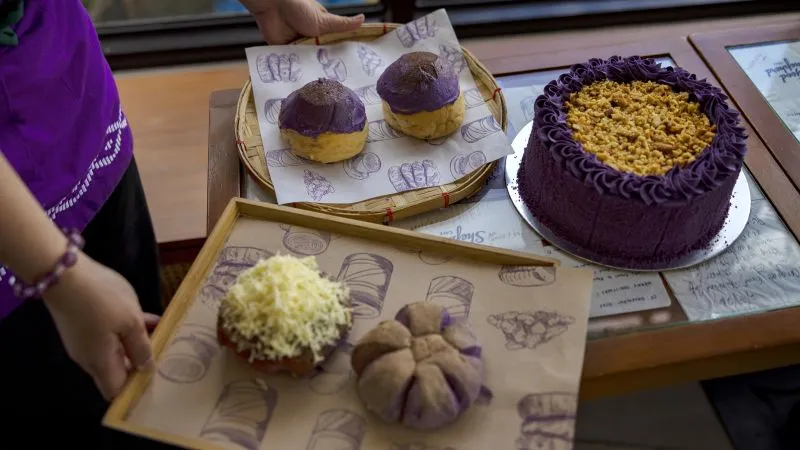
去年 12 月,色彩權威機構 Pantone 將「雲舞者」(Cloud Dancer)——一種飄逸輕盈的白色調——評選為 2026 年年度代表色。但僅僅幾個月後,就有跡象表明,這些頂尖色彩專家們這次的加冕似乎早了那麼一點點。
Last December, Pantone crowned “Cloud Dancer,” a billowy shade of white, as the Color of the Year for 2026. Just a few months later, there is evidence to suggest that the go-to hue specialists may have staged their latest coronation a shade prematurely.
從紐約的咖啡館到雪梨的麵包坊,再到倫敦的美妝零售店,一場「紫色風暴」正在全球各地落地生根。這種色調從鮮艷的紫羅蘭到清雅的薰衣草紫不等,確切的色彩因應用而異,但它的源頭都可以追溯到菲律賓。
From coffee shops in New York to bakeries in Sydney and beauty retailers in London, a purple reign is taking root across the globe. Ranging from vivid violet to light lavender, the exact tone varies but it can be traced back to the Philippines.
更具體地說,是源自於群島地表下的一種本土山藥(參薯)。這種富含澱粉的根莖類蔬菜有許多名字——dioscorea alata、uwhi、圭亞那葛根——但在當地,乃至現在愈發響亮的國際知名度中,它最常被稱為「ube」(香芋/參薯)。
More specifically, to just below the archipelago’s surface to a native species of yam. It’s a starchy root vegetable with many names — dioscorea alata, uwhi, Guyana arrowroot — but is most often known locally, and increasingly internationally, as ube.
在通行於菲律賓全境的他加祿語中,ube(發音為 oo-beh)意為「塊莖」。隨著全球食客對這款帶有堅果與香草般香氣的質樸紫色食材胃口大開,ube 正迅速成為一項獲利豐厚的菲律賓出口主力。
Meaning “tuber” in Tagalog, a language spoken across the Philippines, ube (pronounced oo-beh) is becoming an increasingly lucrative Filipino export as the rest of the world seeks to sate its appetite for the earthy purple ingredient with a nutty or vanilla-like taste.
根據菲律賓貿易和工業部(DTI)與 CNN 分享的數據,去年這個東南亞國家出口了近 170 萬公斤的 ube 相關產品,價值超過 320 萬美元,相較 2024 年大幅增長了 20.4%。
Almost 1.7 million kilograms of ube products, worth over $3.2 million, were exported by the Southeast Asian country last year, according to data shared with CNN by the Department of Trade and Industry (DTI) of the Philippines, a 20.4% rise from 2024.
在這些 ube 出口份額中,近一半(約 95.6 萬公斤,價值 150 萬美元)流向了美國。這相當於美國前一年進口量的兩倍,且單獨一個國家的進口總量就超過了排在後五位的出口市場——加拿大、澳大利亞、英國、荷蘭和紐西蘭的總和。
Nearly half of those ube exports, roughly 956,000 kg worth $1.5 million, went to the United States. That’s double the volume the US imported the previous year, surpassing the five next biggest markets — Canada, Australia, the United Kingdom, the Netherlands and New Zealand — combined.
星巴克就是最好的例子。本月初,星巴克在其美國門店推出了一款冰搖香芋椰奶瑪奇朵(iced ube coconut macchiato),將這款「爆紅趨勢」新品納入其最新的春季菜單。
Look no further than Starbucks, which rolled out an iced ube coconut macchiato across its US stores earlier this month as a “trending” addition to its refreshed spring menu.
鑑於去年該連鎖店的高端臻選店(Reserve stores)——提供獨特飲品的主力店——中該口味大受歡迎,星巴克目前在歐洲門店中又追加了更多 ube 系列產品,將其同時融入到冰拿鐵和傳統的香草拿鐵之中。
Citing its popularity last year among customers at the coffee chain’s Reserve stores — flagship locations with unique drink offerings — Starbucks has added even more ube products in Europe, centering it in both iced and traditional vanilla lattes.
有些變化款甚至融入了抹茶——這種曾在過去十年間風靡全球的日本綠茶粉末。截至去年 9 月,標記為 #MatchaTok 的 TikTok 影片就高達近 70 萬支。
Some variations are infused with matcha, the Japanese green powdered tea that took the world by storm across the last decade, starring in almost 700,000 TikToks(aka MatchaTok) by last September.
果不其然,用戶們品嚐最新發佈的 ube 飲品——包括總部位於英國的連鎖咖啡品牌 Costa 於本月推出的新品——的短影音,正如漣漪般在各大社交媒體平台擴散傳播。
Sure enough, videos of users sampling newly released ube drinks — which have also been launched this month by UK-based coffee-shop chain Costa— are already rippling across the social media platform.
這兩款高顏值產品相繼成為病毒式爆紅爆品的相似軌跡,對餐飲文化網站《Eater》的資深記者貝蒂娜·馬卡林塔爾(Bettina Makalintal)來說,絕對不是巧合。
The parallels in two particularly picturesque products becoming viral hits are not a coincidence to Bettina Makalintal, a senior reporter at food and dining culture website Eater.
「那是第一眼的視覺衝擊力,」出生於菲律賓並於五歲移居美國的馬卡林塔爾向 CNN 表示。「即使那是一件非常熟悉、簡單的事物,但如果它的顏色不同尋常或令人驚豔——就像彩虹貝果、巴西莓果碗,或者是比普通草莓更蒼白的白草莓、以及抹茶——它就能帶來這股巨大的吸引力。」
“It’s that immediate visual impact,” Makalintal, who was born in the Philippines before moving to the US at five years old, told CNN. “Even if there’s something that’s very familiar and simple, if the color is different or exciting — like the rainbow bagel, like the acai bowl, like strawberries that are paler than a regular strawberry, like matcha — it helps bring that appeal.”
「Ube 看起來就是一個非常顯眼的候選者,因為一來它是一種對大眾來說接受門檻不高的嶄新風味,二來它也完美符合了現代人對於追求具有高度美感食物的渴望。」
“Ube felt like an obvious candidate based on both, ‘Here’s a new flavor that’s not very challenging to people, but also fits into this desire to have aesthetically pleasing food.’”
飲品僅僅是 ube 供應鏈中的冰山一角。將其搗碎,並與牛奶、糖和奶油一起煮沸後,就會形成一種被稱為「ube halaya」(香芋泥抹醬,又稱 halayang ube)的濃稠抹醬。
Drinks are only one branch of the ube supply chain. When it is mashed and boiled with milk, sugar and butter, a thick spread called ube halaya — also known as halayang ube — is formed.
這種甜醬除了可以單獨作為甜點享用,亦廣泛地用作各類甜點的配料、內餡或基底。紐約市的菲律賓快閃烘焙坊 Kora 在 2021 年曾累積了多達一萬人的後補名單,主要原因便是其 Ube 布里歐許甜甜圈掀起的狂熱旋風。去年三月,該店已經在皇后區開設了永久實體店。
While a standalone dessert, the jam is also used as a topping, filling or base in a range of desserts. Kora, a Filipino pop-up bakery in New York City, amassed a 10,000-person waiting list in 2021 due in part to the overwhelming popularity of its ube brioche doughnut. A permanent shop opened in Queens last March.
起司蛋糕、布丁和冰淇淋在世界各地也都能見到受 ube 啟發的改良版本;此外,美國連鎖超市 Trader Joe’s 自 2020 年起每年限時發售的 ube 麻糬鬆餅粉也都引發一輪又一輪的瘋搶熱潮。
Cheesecake, flan and ice cream likewise boast ube-inspired variations across the globe, while Trader Joe’s ube mochi pancake and waffle mix has proven to be a smash hit upon its limited-time release each year since 2020.
連美妝界也正搭上這股流行快車,美妝品牌 Huda Beauty 於 2025 年 1 月在全球推出了以 ube 為靈感的一系列化妝品,包括定妝粉與唇蜜。
Even the beauty world is capitalizing on the trend, with cosmetics brand Huda Beauty launching a collection of ube-inspired products, including setting powder and lip gloss, globally in January 2025.
「如今它(ube)簡直無處不在,」聯合國糧農組織(FAO)駐菲律賓代表萊昂內爾·達巴迪(Lionel Dabbadie)本月初在菲律賓碧瑤市舉辦的國際農業旅遊大會致辭中表示。「紐約的 ube 冰淇淋、倫敦的 ube 蛋糕、東京的 ube 拿鐵。這絕對是一段難以置信的巨大成功故事。」
“Today it [ube] is everywhere,” UN Food and Agriculture Organization (FAO) representative in the Philippines Lionel Dabbadie said in a speech at the International Farm Tourism Conference in the Filipino city of Baguio earlier this month. “Ube ice cream in New York, ube cakes in London, ube lattes in Tokyo. It is an incredible success story.”
然而,這巨大的成功,正在給那些必須確保產量跟上全球對這種紫色山藥日益增長需求的人們帶來排山倒海的壓力。
Yet that success is putting huge pressure on those tasked with ensuring supply can keep pace with the world’s accelerating demand for the purple yam.
據《紐約時報》報導,菲律賓全境的 ube 年產量已從 2021 年的 1,500 萬公斤以上,在過去兩年下滑至約 1,400 萬公斤左右,而這些產出絕大部分仍需保留給國內市場自行消費。《紐約時報》補充指出,近年來越南和中國已經在加速投入並擴大紫色山藥的生產規模。
Annual ube production in the Philippines has dropped from above 15 million kilograms in 2021 to roughly 14 million kilograms across the last two years, according to the New York Times, with the majority of that produce being set aside for national consumption. In recent years, Vietnam and China have accelerated their production of purple yams, the New York Times added.
與水稻、玉米等大規模工業化種植的農作物不同,ube 通常種植在季節性零碎小塊的農地上。大部分產地集中在中維薩亞斯地區(Central Visayas),這種塊莖在整個生長期都需要充沛的水分,並在種植後歷經大約 10 到 11 個月才能迎來收成(約落在每年 11 月至隔年 2 月間)。
Unlike rice, corn and other mass-produced crops, ube is typically grown on small, seasonal patches of farmland. With many plots spread across the Central Visayas region, the tuber requires ample moisture throughout its growing period before being harvested roughly 10 to 11 months after planting, between November and February.
這導致它在面對氣候條件變化時顯得極其脆弱——而在一個正日益頻繁遭遇極端天氣考驗的島國中,這是一個極大的不利因素。隨著氣候危機對「全球南方」的影響持續放大,去年 11 月,颱風鳳凰(Typhoon Fung-wong)成為該年第 21 個影響菲律賓的名命風暴。
That makes it particularly vulnerable to changes in conditions — not ideal in a country that is becoming increasingly accustomed to extreme weather. Last November, Typhoon Fung-wong was the 21st named storm in a year to impact the Philippines, as the climate crisis continues to disproportionately affect the Global South.
此外,英國跨國研究機構 BMI 於今年二月發佈的一份報告發現,許多農民為了趁這波全球熱潮將利潤最大化,選擇在價格走俏時盡可能多地把收成賣掉變現。由於 ube 通常是藉由埋入切塊的塊莖來繁衍生長,這種過度變現引發的「次年種薯短缺」,正加劇未來的供應體系問題。
Additionally, many farmers are seeking to cash in on the current global interest in ube by selling as much of their harvest as possible while prices are higher, a February report by British multinational research firm BMI found. With ube typically grown by burying cut-up pieces of the tuber, the subsequent shortage of material for the following harvest is only deepening supply issues, the report argued.
上述所有因素交織,使得馬卡林塔爾及廣大的菲律賓裔美籍社區——例如居住在皇后區伍德賽德(Woodside)「小馬尼拉」的菲律賓人——在獲取正宗道地的 ube 原材上,面臨著前所未有的困難。
All these factors contribute to the increasing difficulty for Makalintal and wider Filipino American communities, like those in the “Little Manila” enclave of Woodside, Queens, to source authentic ube.
「與我交談過的許多人,以及我認識的大多數菲律賓人,現在根本買不到真正原汁原味的根莖塊莖,」現居紐約市的馬卡林塔爾說。「需求固然是在爆發,但市場的供貨能力與進口市場卻完全沒跟上腳步。」
“Many people that I’ve talked to, most of the Filipinos I know, can’t really get the real root vegetable,” Makalintal, who lives in New York City, said. “Demand has grown, but the availability and import market hasn’t necessarily kept up.”
除了供應物流外,伴隨 ube 風靡全球而引發的另一股潛在隱憂是:這款備受本土深愛的國民核心主食,正在與其自身的文化根基漸行漸遠。
Beyond logistics, there is a creeping concern raised by ube’s global uptake: that a beloved national staple is becoming detached from its cultural roots.
世世代代的菲律賓人在酷熱盛夏或是節慶聚會中,總是習慣手舉一杯高高的「哈囉哈囉」(halo-halo)。這款標誌性的菲律賓刨冰甜點中,ube halaya 總是壓軸領銜,搭配各式色彩鮮艷的配料,如蜜餞菠蘿蜜、甜芸豆和西米露。這種山藥常作為「champorado」(一種甜巧克力米粥)和「mamón」(一種綿密海綿蛋糕)等其他國民佳餚的主角,但一些人憂心它的特殊意義會在漂洋過海後遭到稀釋。
Generations of Filipinos have toasted hot summer days and celebratory occasions with a tall glass of halo-halo, an iconic shaved ice dessert where ube halaya headlines a hodgepodge of colorful toppings, from candied jackfruits and sweetened beans to tapioca pearls. The yam often serves as the centerpiece of other national dishes, such as “champorado,” a sweet rice porridge, and “mamón,” a sponge cake, but some fear its importance is being diluted upon arrival on foreign shores.
「當我在報導中讀到幾乎沒有人知道 ube 其實是來自菲律賓時,簡直不敢相信,」達巴迪在他的大會致辭中繼續慨嘆。
“I couldn’t believe it when I read that very few people know that ube comes from the Philippines,” Dabbadie continued in his conference speech.
對馬卡林塔爾而言,這演變成一種令人不安的自我預言現象:由於文化認知的缺失,疊加原材料供不應求的窘境,常導致商家使用香精萃取物、甚至是地瓜、紫薯作為替代品,有的甚至完全沒有加入任何真正的 ube 原材,純粹依賴色素和紫色外觀來「搭便車」蹭熱度賺錢。
For Makalintal, that contributes to a “troubling” self-fulfilling prophecy, whereby a lack of cultural understanding and supply issues often lead to vendors substituting true ube for extract products, sweet potatoes, or even omitting it entirely and relying solely on purple coloring to “take advantage” of the trend.
這個問題因 ube 天生那含蓄低調的口感而變得更加顯著。當被濃縮為香精萃取物,或是混入像椰奶這類強勢風味的材料時,許多慕名去嘗試那些打著 ube 招牌產品的人,最後可能只品嘗到極其微弱的殘存,甚至根本沒有吃出那種令馬卡林塔爾和無數菲律賓人誓死捍衛的情懷風味。
It’s an issue exacerbated by ube’s inherently understated flavor. When reduced to an extract, or mixed with dominating flavors like coconut, many people trying the litany of products marketed as ube-flavored are sampling only a trace, or nothing at all, of an ingredient that Makalintal and countless others feel passionately protective of.
「現在所有人都在喝 ube 飲料,但他們可能根本不知道它原本應該是什麼滋味。大眾把它矮化簡化為『紫色的一種代表』而已,」她說。
“Everyone’s drinking ube now, but they don’t even really know the flavor. They’ve reduced it to this thing that’s just purple,” she said.
「讓人感到痛苦的部分在於,這就像你引以為傲的文化產物終於擠進主流視野時,隨之而來的卻是在公共論述中對它失去了掌控權與詮釋權。這就是追求這種文化可見度(Visibility)時所必須付出的代價吧。」
“The thing that’s hard is that it feels like one of those things where it feels like the byproduct of your culture … hitting the mainstream, where you just lose control of it in the cultural conversation. That is the trade-off of visibility.”