機器人與拉麵:直擊韓國最大泡麵工廠
Robots and Ramyeon: Inside South Korea’s Largest Instant Noodle Factory
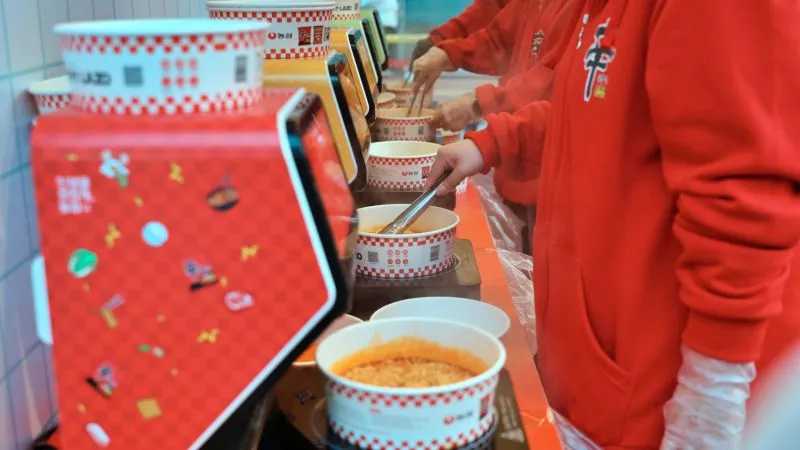
在龜尾市的農心拉麵工廠廠房裡,一場工業交響曲正悄然上演:小麥粉的研磨與壓路機的震響交織在一起,隨之而來的是切刀有節奏地劃過麵團的聲音;新鮮麵條絲被蒸騰的蒸汽發出嘶嘶聲,隨後在劈啪聲中瞬間油炸,然後在不斷低鳴的輸送帶上眨眼間被送走,最後被包裝進沙沙作響的塑料袋中。
On the floor of Nongshim’s noodle factory in the city of Gumi, there’s an industrial symphony playing out: the grinding of wheat flour and rattle of rollers gives way to the rhythmic swish of blades on dough; ribbons of fresh noodles are steamed with a hiss, flash-fried with a crackle, then whisked away in the blink of an eye on an ever-humming conveyor belt, and packaged into crinkling plastic.
每一分鐘,都有 600 包拉麵——即韓國速食麵,也被稱為 ramyun 和 ramen——從高度自動化、超高速的生產線上滾滾而下,裝入箱中並由機器人運往裝載區。
Every minute, 600 packs of ramyeon — Korean instant noodles, also known as ramyun and ramen — roll off the highly automated, ultra-fast production lines into boxes carried to the loading bay by robots.
這座占地 42,266 平方公尺(約 12,785 坪)的設施是韓國最大的速食麵工廠,每天生產高達 600 萬包麵。
This 42,266‑square‑meter (454,947 square feet) facility is South Korea’s largest instant noodle factory, churning out 6 million packets per day.
「去年,我們生產了 12.3 億包,價值 8,840 億韓元(約 5.98 億美元),」工廠經理金相勳(Sang Hoon Kim,音譯)表示。
“Last year, we produced 1.23 billion units, worth 884 billion won ($598 million),” says factory manager Sang Hoon Kim.
龜尾廠僅憑 600 名員工,便包辦了韓國國內市場 80% 的辛拉麵以及 90% 的炸醬麵(Chapagetti,一種類似義大利麵的黑色炸醬粗麵條)。金表示,這歸功於一套配備 AI 增強的傳感器和智能相機,可監控生產的每一個環節,確保安全與品質,他補充說這項技術是由具備「豐富拉麵製作知識」的內部員工研發的。
The Gumi plant makes 80% of the Shin Ramyun and 90% of the Chapagetti (thick and chewy spaghetti-like noodles with black soybean paste) sold domestically with just 600 staff. That’s made possible by a suite of AI-enhanced sensors and smart cameras that monitor every point of production, ensuring safety and quality, says Kim, adding that technology is developed in-house by staff that have “extensive knowledge of ramyeon-making.”
但在龜尾,拉麵不僅僅是食物:工廠及其產品已經成為這座城市的文化支柱。
But in Gumi, ramyeon is more than just a food: the factory and its products have become the city’s cultural anchor.
拉麵之城Ramyeon city
位於韓國首都首爾東南方約 270 公里處,龜尾是一座擁有約 40 萬居民的中型城市,擁有悠久的工業中心歷史——最初以紡織業聞名,隨後發展電子業,如今則成為該國最大的通信技術中心。
Around 270 kilometers (168 miles) southeast of South Korea’s capital, Gumi is a mid-tier city with roughly 400,000 residents and a long history as an industrial hub — first known for textiles, then electronics, and today, as the country’s largest communications technology center.
這裡平時不太有遊客光臨,但情況正在轉變。
It’s not usually frequented by tourists; but that’s changing.
2022 年,龜尾市將焦點投射在其麵食產業上,並在同年啟動了首屆「拉麵節」。
In 2022, Gumi put the spotlight on its noodle production, launching the inaugural “ramyeon festival” the same year.
龜尾市政廳高級官員兼音樂節總策劃金正泰(Jeong-tae Kim,音譯)表示,其目標是將龜尾「無聊」的工業城市形象,翻轉為居民與遊客都能樂在其中的「有趣」勝地。
The goal, says Jeong-tae Kim — a senior official at Gumi City Hall and the lead festival organizer — was to transform Gumi’s reputation as a “boring” industrial city into a “fun” destination for residents and tourists alike.
「作為一座工業城市,我們需要一種文化身份,」金正泰表示。
“As an industrial city, we needed a cultural identity,” says Jeong-tae Kim.
市政廳主動接洽農心,雙方攜手舉辦了這場節慶。此後規模年年擴大:從首屆的僅 1 萬名參觀者,暴增到 2025 年創紀錄的 35 萬人,在為期三天的活動中賣出了 54,000 碗麵和 480,000 包拉麵。
The city hall approached Nongshim, and it partnered with the council on the festival, which has grown every year: from just 10,000 visitors in its first edition to a record 350,000 in 2025, selling 54,000 bowls and 480,000 packets of ramyeon across the three-day event.
該節日的高潮是長達 475 公尺的徒步攤商街,主辦單位稱之為「世界上最長的拉麵餐廳」。在這裡,數十家餐廳和主廚端出各式拉麵以及拉麵啟發的創意料理,從拉麵三明治到南美慢烤(Asado)煙燻豬肉麵湯等一應俱全。
The festival’s highlight is a 475-meter (1,558-foot) pedestrianized strip of vendors that the organizers refer to as “the world’s longest ramen restaurant.” Here, dozens of restaurants and chefs serve up ramen and ramen-inspired dishes, from ramen sandwiches to Asado smoked pork noodle soup.
攤商所用的麵條均由農心工廠直接供應。「現炸的拉麵無比美味,」工廠經理金相勳表示,他補充說,看到遊客蜂擁而至龜尾「帶給了我們極大的自豪感」。
Vendors are provided with noodles from the Nongshim factory. “Freshly fried ramen is incredibly delicious,” says factory manager Sang Hoon Kim, adding that seeing tourists pour into Gumi “has given us a great sense of pride.”
金正泰透露,在節慶周末,來自鄰近城市大邱的火車票全部售罄,當地商家也回報銷量激增。他指出,目前的挑戰在於如何將這種效益延續到單一周末以外。
On festival weekends, train tickets from the nearby city of Daegu sell out and local vendors report a surge of sales, says Jeong-tae Kim. The challenge now, he says, is stretching the benefits beyond a single weekend.
從生存必需品到國家象徵Necessity to national icon
1960 年代,當韓國仍從韓戰的創傷中復甦時,速食麵傳入了韓國。當時物資短缺,作為主食的米更是匱乏。於是人們開始用美軍提供的麵粉製作麵條,並在 1960 年代受到政府的大力推廣。
Instant noodles came to South Korea in the 1960s, when the nation was still recovering from the Korean War: there were food shortages and the country’s staple, rice, was limited. So, people began making noodles with wheat flour provided by the US army, which was actively promoted by the government in the 1960s.
「三養食品」——以火辣辣的「辣雞炒麵」聞名的品牌——於 1963 年成為韓國第一家速食麵製造商。其設計靈感來自日清創辦人安藤百福於 1958 年研發的日式速食麵,但三養針對韓國人口味進行了改良:將雞湯底換成了牛肉,並加入了紅辣椒。農心隨後於 1965 年加入市場,接著是八道(Paldo)和不倒翁(Ottogi)等其他本土品牌在 1980 年代相繼亮相。
Samyang Foods, the brand behind the fiery hot “Buldak Ramen,” became Korea’s first instant noodle manufacturer in 1963, taking inspiration from the Japanese-style of instant noodles developed by Nissin founder Momofuko Ando in 1958, but adapted for Korean tastes: the chicken broth was switched to beef, and red chili was added. Nongshim followed in 1965, with other domestic brands like Paldo and Ottogi launching in the 1980s.
金相勳還記得 1986 年辛拉麵上市時的情景,當時他還在念大學。既管飽又便宜——一包售價僅 200 韓元(約合 20 美分)——簡直是完美的學生餐。
Sang Hoon Kim remembers when Shin Ramyun was launched in 1986, while he was still in college. Filling and cheap — it cost 200 won, or 20 cents — it was the perfect student meal.
「那時我狂吃。整箱整箱地買,」金相勳回憶道。「我一天吃過最多紀錄是 10 包。」畢業後,他在家鄉釜山的農心公司找到了一份工作,並於 1992 年隨公司調往龜尾,從基層生產線一步步晉升到管理階層。
“I ate a ton of it. I’d buy boxes of it,” recalls Sang Hoon Kim. “The most I ever ate in a day was 10 packs.” After graduating, he got a job with Nongshim in his home city, Busan, and moved to Gumi with the company in 1992, working his way up from the production line to management.
三十年過去了,他依然百吃不厭:即使在工廠每天都要品嚐出廠的拉麵,「休假的時候,我也會在家裡煮來再吃一次,」他說。
Three decades on, he’s not tired of it: Even though he samples the ramyeon produced at the factory daily, “on holidays, I’ll even cook it at home and eat it again,” he says.
金相勳對拉麵的熱愛並非個例:根據世界泡麵協會的數據,在 2025 年,韓國人消費了超過 40 億份速食麵,相當於每人每年大約吃掉 77 碗。
Sang Hoon Kim is not alone in his love of ramyeon: In 2025, Koreans ate more than 4 billion servings of instant noodles, or roughly 77 bowls per person each year, according to the World Instant Noodle Association.
韓國拉麵的受歡迎程度在全球範圍內也正急劇飆升:2025 年韓國速食麵出口額增長了 22%,創下 15 億美元的新高紀錄。
Ramyeon’s popularity is soaring globally, too: Korea’s instant noodle exports grew 22% in 2025, worth a record $1.5 billion.
流行文化中的高光時刻——例如奧斯卡名片《寄生上流》中的「炸醬烏龍麵(ram-don)」場景,或是在《K-Pop Demon Hunters》中的暴風吸麵橋段——都大幅提升了國際消費者對韓國拉麵的認知度。儘管如此,農心全球行銷總監徐珍妮(Jinny Seo,音譯)表示,這些時刻折射出了數十年來為向更廣大市場推廣產品所做出的努力。
Pop culture moments — like the “ram-don” scene in “Parasite” or the noodle-slurping moment in “K-Pop Demon Hunters” — have boosted awareness among international consumers about Korean ramen, although Jinny Seo, Nongshim’s global head of marketing, says these moments reflect decades-long campaigns to promote it to a wider market.
徐珍妮說,這些時刻已成為進一步擴大客群的「催化劑」:例如農心便與 Netflix 合作,推出了一系列以該片角色為靈感研發的《K-Pop Demon Hunter》風味拉麵。
These moments have become a “catalyst” to further expand their consumer base, she says: For example, Nongshim collaborated with Netflix on a line of “K-Pop Demon Hunter” noodle flavors inspired by the film’s characters.
雖然農心在國內市場佔據主導地位,但競爭對手三養在 2024 年的海外銷售額中首度超越了它。
While Nongshim dominates the domestic market, competitor Samyang overtook it in overseas sales in 2024.
「我們目前面臨的情況是,像歐洲這樣的地區的買家正要求供應更多產品,但我們已經供不應求,」徐說。為了滿足這股需求,農心正在釜山興建價值 1,918 億韓元(約 1.3 億美元)的綠山(Noksan)外銷專用工廠,預計年生產量可達 5 億包拉麵,並在今年稍晚投產後使公司目前的國內出口額翻倍。
“We’re in a situation where buyers in places like Europe are demanding more products, but we can’t deliver,” says Seo. To meet this demand, Nongshim is building the 191.8 billion-won ($130 million) Noksan export-only factory in Busan, expected to produce 500 million ramyeon units annually and nearly double the company’s current domestic exports when it opens later this year.
這會動搖龜尾作為「韓國拉麵故鄉」的稱號嗎?
Will this shake Gumi’s title as Korea’s home of ramyeon?
徐並不這麼認為:龜尾以其驚人的辛拉麵產量,依然是「農心生產的核心樞紐」。
Seo doesn’t think so: Gumi, with its huge output of Shin Ramyun, is the “core of Nongshim production.”
金相勳也不擔心:釜山枢纽中正在安裝的許多尖端技術都是在龜尾開發和測試的,這有助於將龜尾市的影響力傳播得更遠。
Sang Hoon Kim isn’t worried either: much of the state-of-the-art technology being installed in the Busan hub has been developed and tested in Gumi, helping to spread the city’s influence even further afield.
在密集的自動化背後,每一款產品仍保留著一絲人性的溫暖:金相勳拿起一包辛拉麵,指向賞味期限下方的三個字;那是負責包裝這袋拉麵的人的名字。
Behind the intense automation, every product retains a small human touch: Sang Hoon Kim picks up a packet of Shin Ramyun and points to three characters beneath the best‑before date; it’s the name of the person who packed the noodles.
「現在他們會印上進行包裝作業的人員姓名,」金表示。「但在我擔任現場經理的時候,上面印的是我的名字。那時候如果賣出了 5 億包辛拉麵,那種感覺,就像全國家家戶戶都認識我名字一樣。」
“Now, they print the name of the person doing the packaging,” says Kim. “But back when I was a field manager, my name was printed on it. If 500 million Shin Ramyun units were sold, it felt like everyone in the country knew my name.”